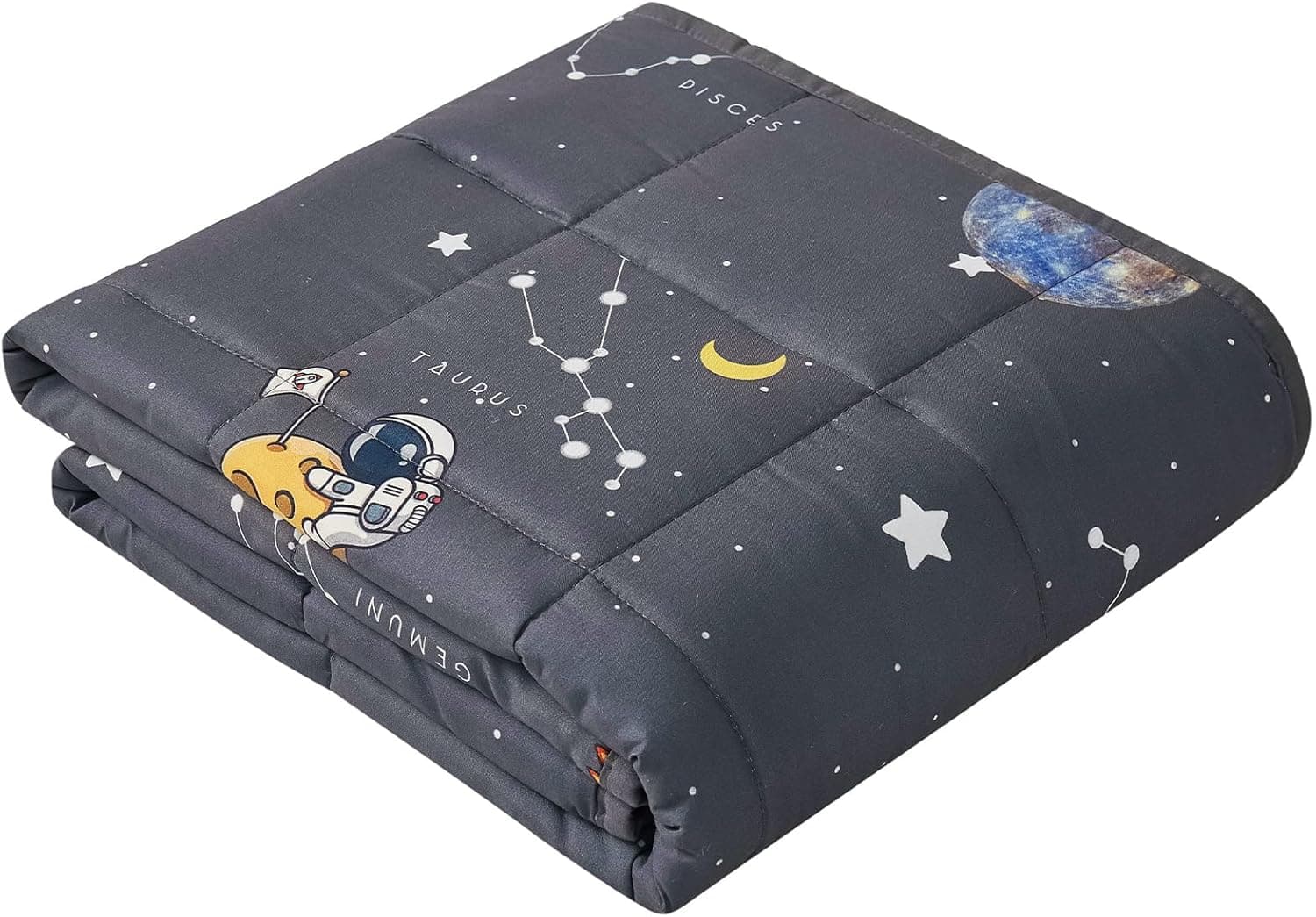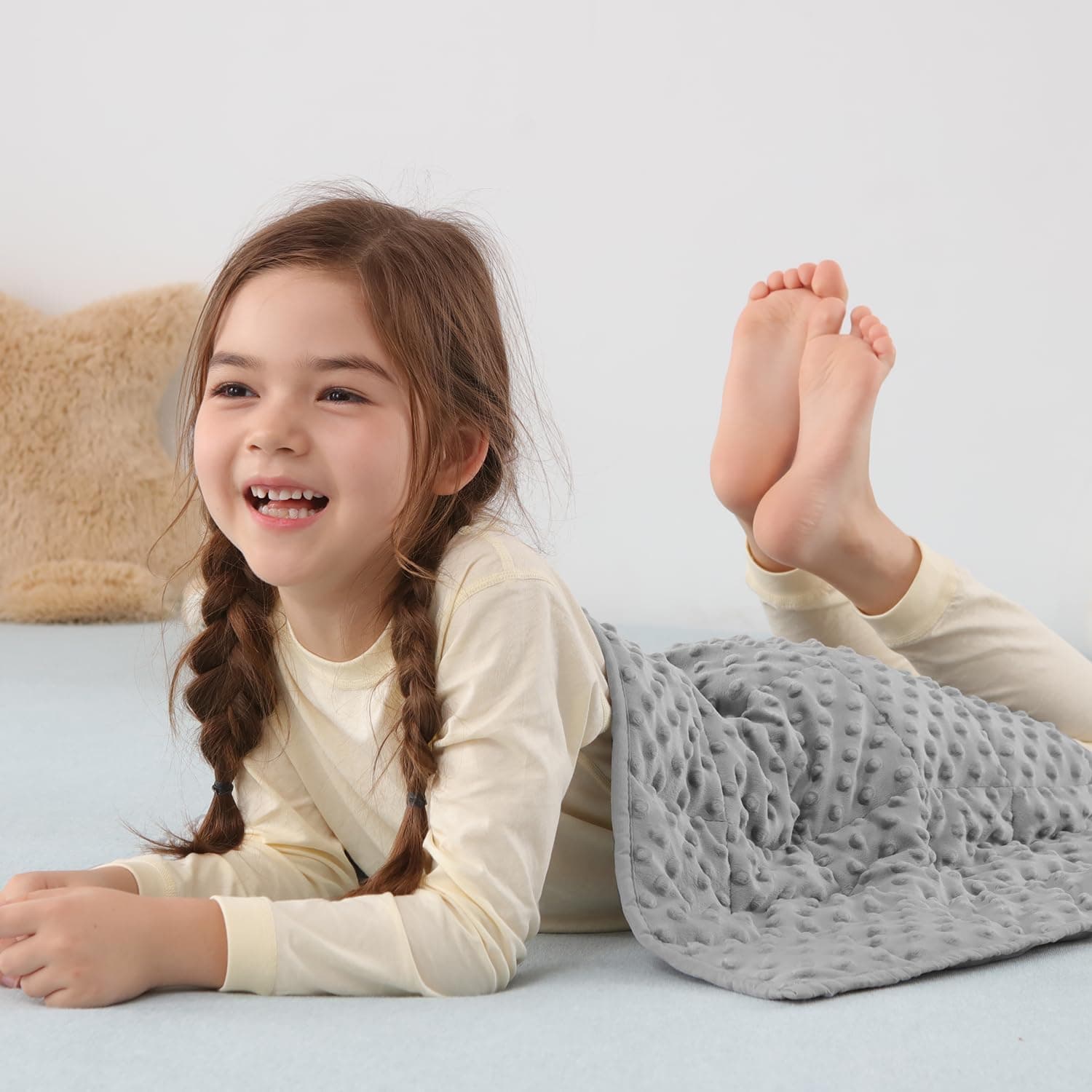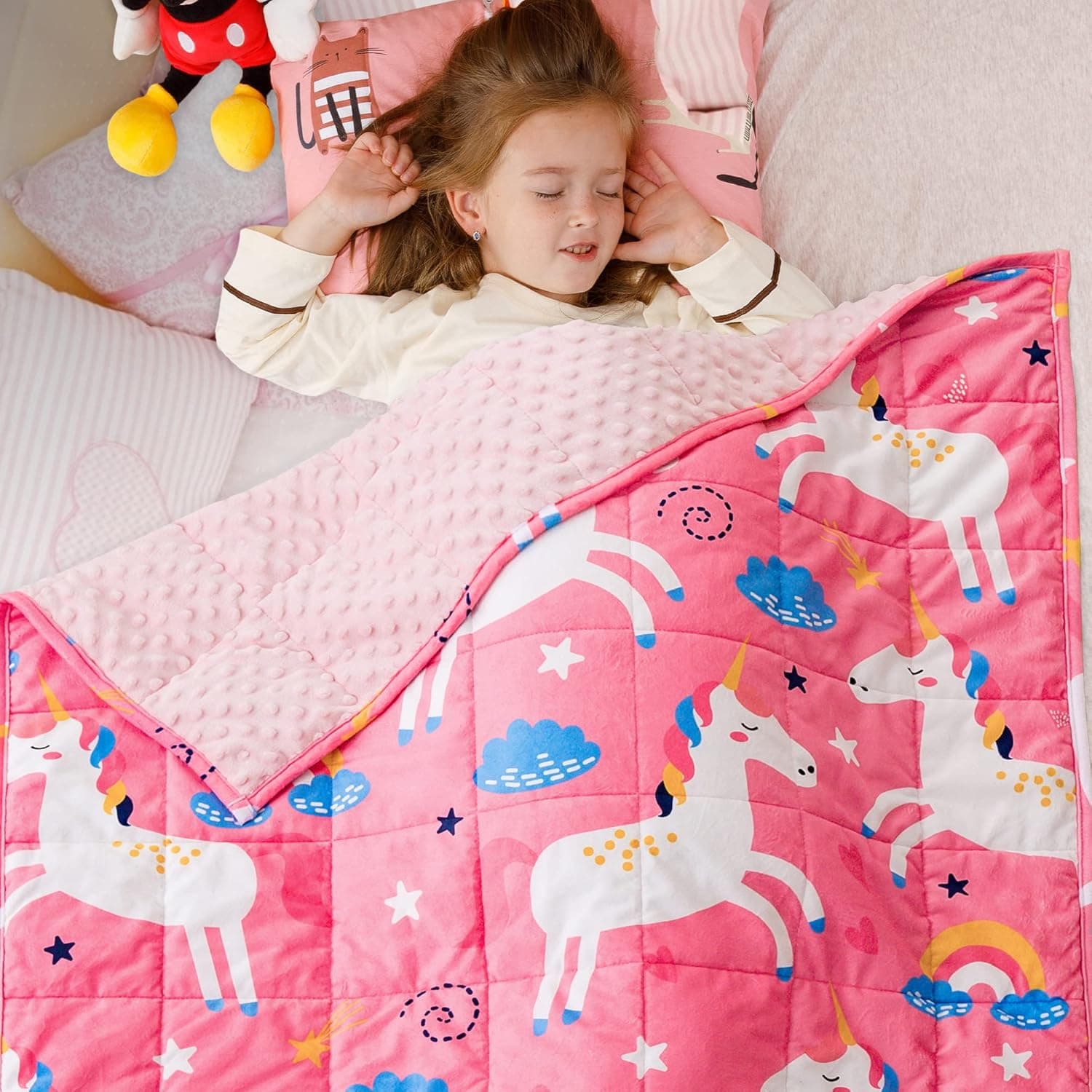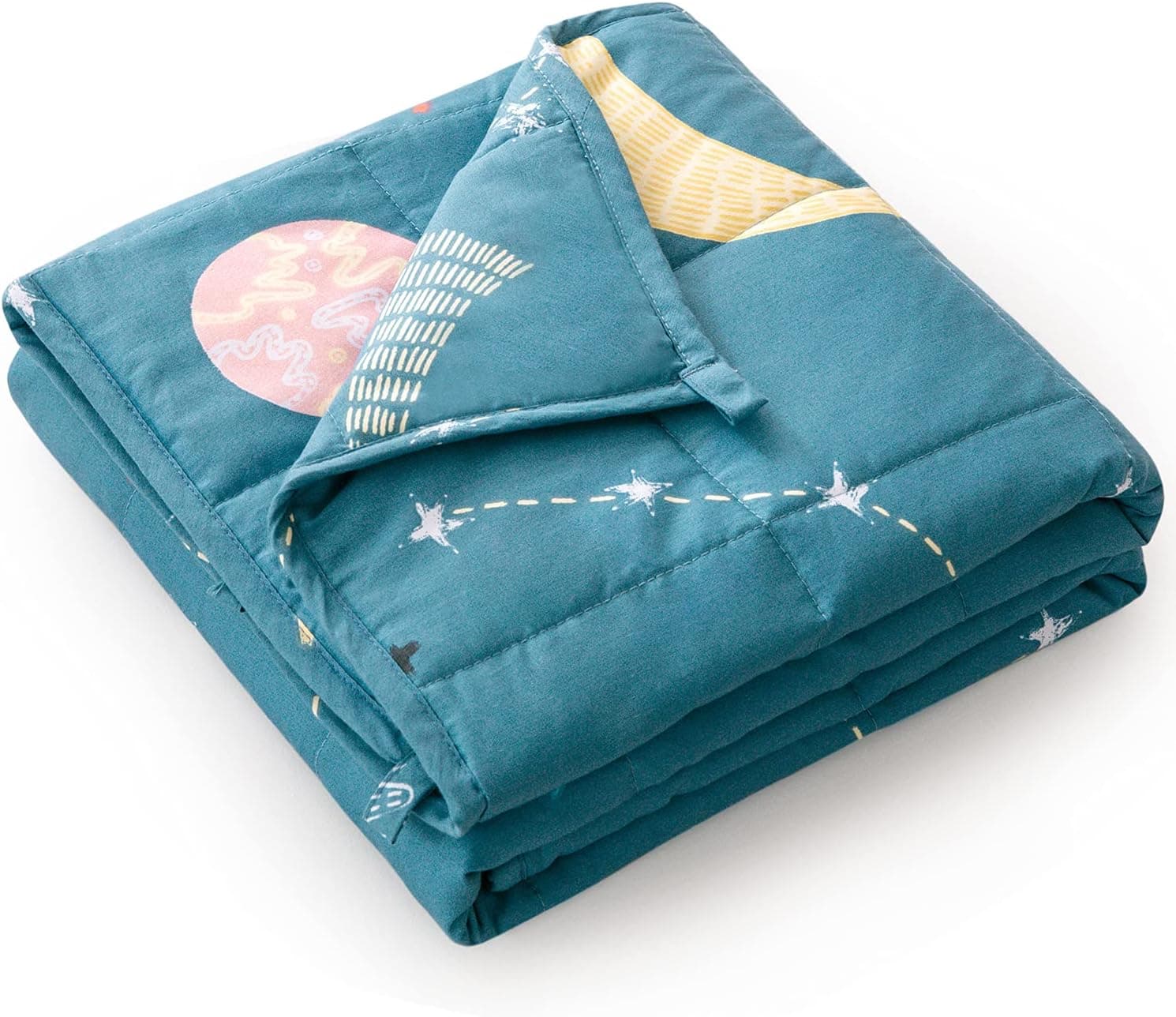
$26.99
Best for
Kids who struggle with bedtime or need calming after school
calming
View on Amazon
Direct product link
Parent-built sensory product guidance for home, school, and therapy
For ProfessionalsFind the right sensory tools faster — without guessing.
A weighted blanket wraps your child in gentle, even pressure — a calming, grounding sensation that can ease anxiety and help sensory kids fall asleep and stay asleep.
Curated for autism, ADHD, and sensory processing differences
Best for
Kids who struggle with bedtime or need calming after school
Direct product link
Best for
School-age kids who run warm and need deep pressure for sleep
Direct product link
Best for
Kids who need calming input during homework, meals, or car rides
Direct product link
Best for
Kids who love soft textures AND need deep pressure for bedtime
Direct product link
Weighted blankets work through deep-pressure stimulation — steady, distributed weight that has an organizing, calming effect on the nervous system. Many families use them for autism, ADHD, anxiety, and sleep difficulties.
A common guideline is to choose a blanket around 10% of your child's body weight. Always follow the manufacturer's sizing chart, and never use a weighted blanket for infants or toddlers, or for any child who cannot remove it independently.
For younger or warmer sleepers, look for breathable fabrics and smaller glass-bead fills that distribute weight evenly. Introduce the blanket gradually — start with short daytime use before overnight.
A common rule of thumb is about 10% of your child's body weight. Always check the manufacturer's sizing guide, and choose a lighter option if you're unsure — the blanket should feel calming, never restrictive.
Weighted blankets are safe for most children who can move and remove the blanket on their own. They are not recommended for infants, toddlers, or any child who cannot reposition it independently. Check with your pediatrician or OT if you have concerns.
The deep, even pressure of a weighted blanket provides calming proprioceptive input that helps many kids with autism or ADHD feel grounded, settle their bodies, and transition into sleep more easily.